
I may have a new obsession:
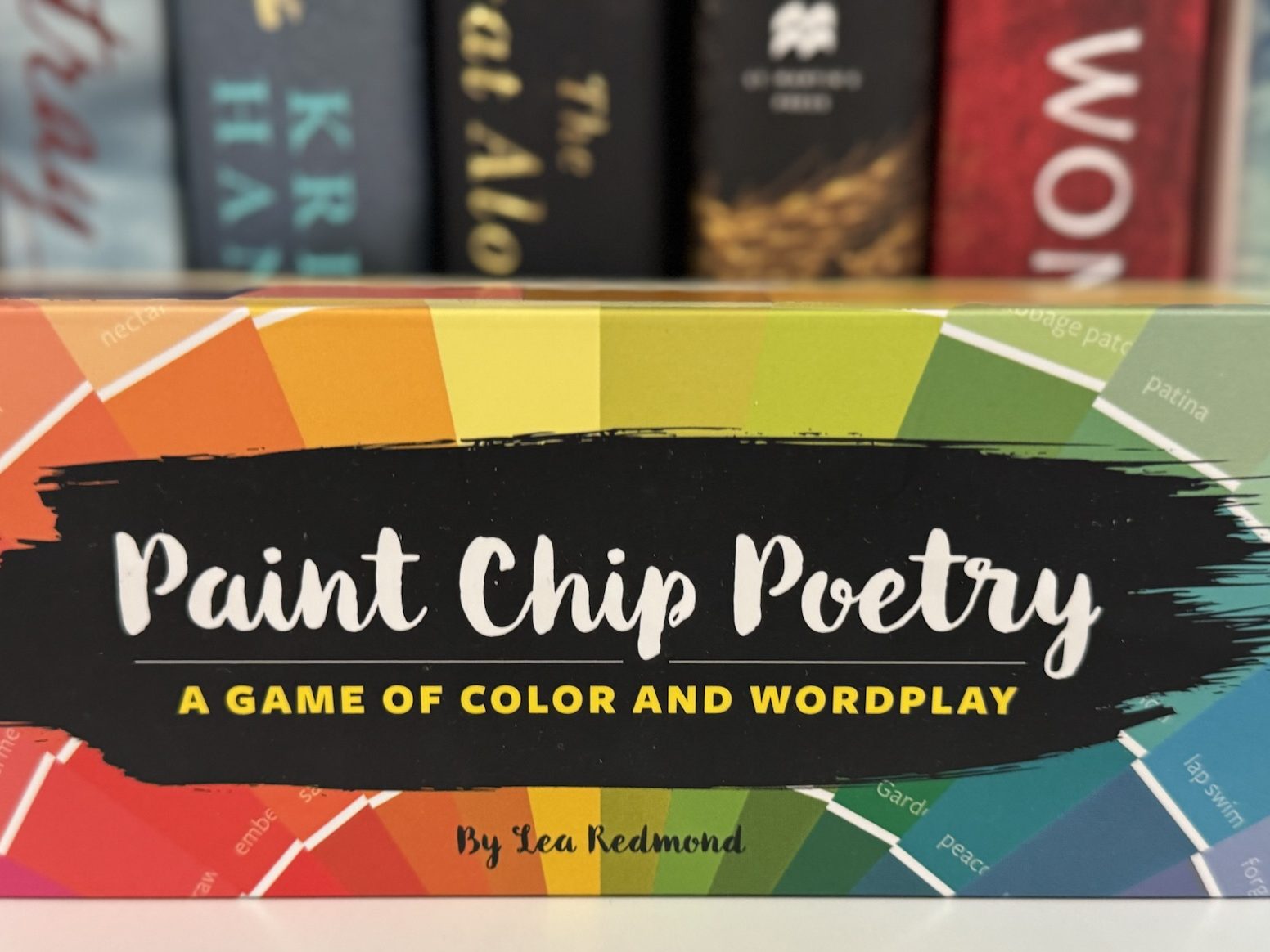
I picked up Paint Chip Poetry: A Game of Color and Wordplay by Lea Redmond on a whim at Blick Art Materials when I was in Atlanta last week. I thought it might be a fun little activity to do when I hit a wall of writer’s block or just need some inspiration.
Interestingly enough, the day after we got back into town, I attended a writing workshop session with the amazing poet Frank X. Walker. At one point during his session, he mentioned that there is no such thing as writer’s block. He said, “All of your memories, your experiences – you own those, and those are seeds for writing. Even your dreams can inspire a poem. You’re always researching, gathering experiences, creating memories. To that end, you’re always writing.” Such powerful words!
Anyway, back to Paint Chip Poetry.
I had used paint chips for various activities with my students back when I was in the classroom full time, both as a way to illustrate nuances in word meaning and also as a means to inspire innovative word choice in general.
However, I never thought of teaching my students the strategy of using paint chips as inspiration for poetry. Genius!
About the Game
The kit I purchased consists of:
- 400 paint chip cards
- 40 prompt cards
- 10 game variation cards
- 1 instruction sheet
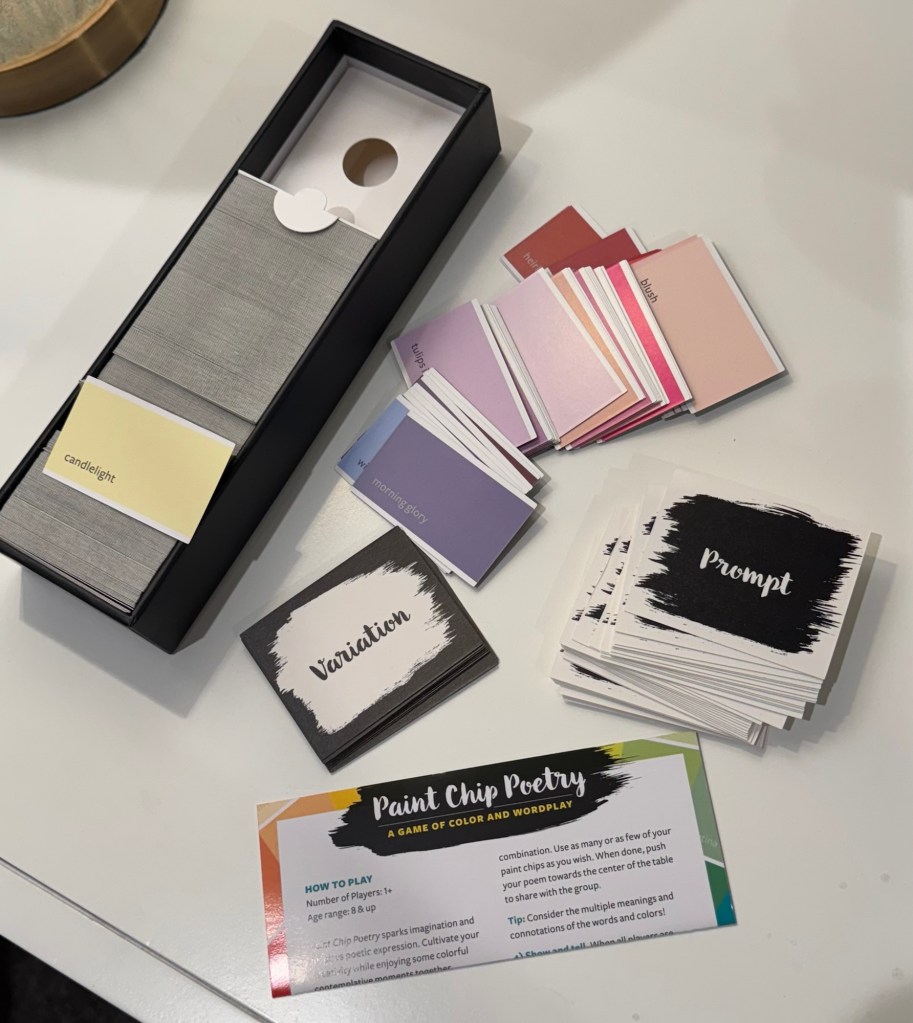
There are endless ways to play the game, but the basic premise is this:
Each player chooses 12 paint chips, and then a prompt card is selected for the group.
The prompt cards have things like “One of these things is not like the other.”
Each player arranges their paint chips however they want and creates a poem inspired by their chips. You don’t have to use them all, and you are free to change the color names slightly to make things flow better.
There are also variation cards that provide fun options, like allowing you to trade cards with other players.
Each player shares their poem with the group, and the judge chooses the winner (players take turns being the judge).
The winner takes the prompt card, everyone discards their first chip cards and selects twelve new chip cards, and then the winner begins the next round by selecting a new prompt card for the group.
The process is repeated for each round of play, with winners of each round collecting the prompt card.
At the end, whoever holds the most prompt cards is declared the overall winner.
Other Ways to Play
The game kit can also be used individually to inspire personal writing, which is so fun!
I think this could easily be adapted into a classroom writing exercise for students of all ages or for use with a writing group.
The kit doesn’t mention this, but I could see it being used collaboratively in a classroom or group setting as well. For example, one player could start the poem by laying down a chip card, and each player could take turns adding to it until a group poem is created.
I really like the kit, with the wide variety of chips, prompt cards, variation, and storage box, but you could always get paint chips at a local hardware store and replicate the activity for free.
My First Paint Chip Poem
I was surprised at how easily my first poem came together, especially because when I first looked at the color chips I chose at random, I wasn’t at all sure how they would come together into any type of cohesive writing.
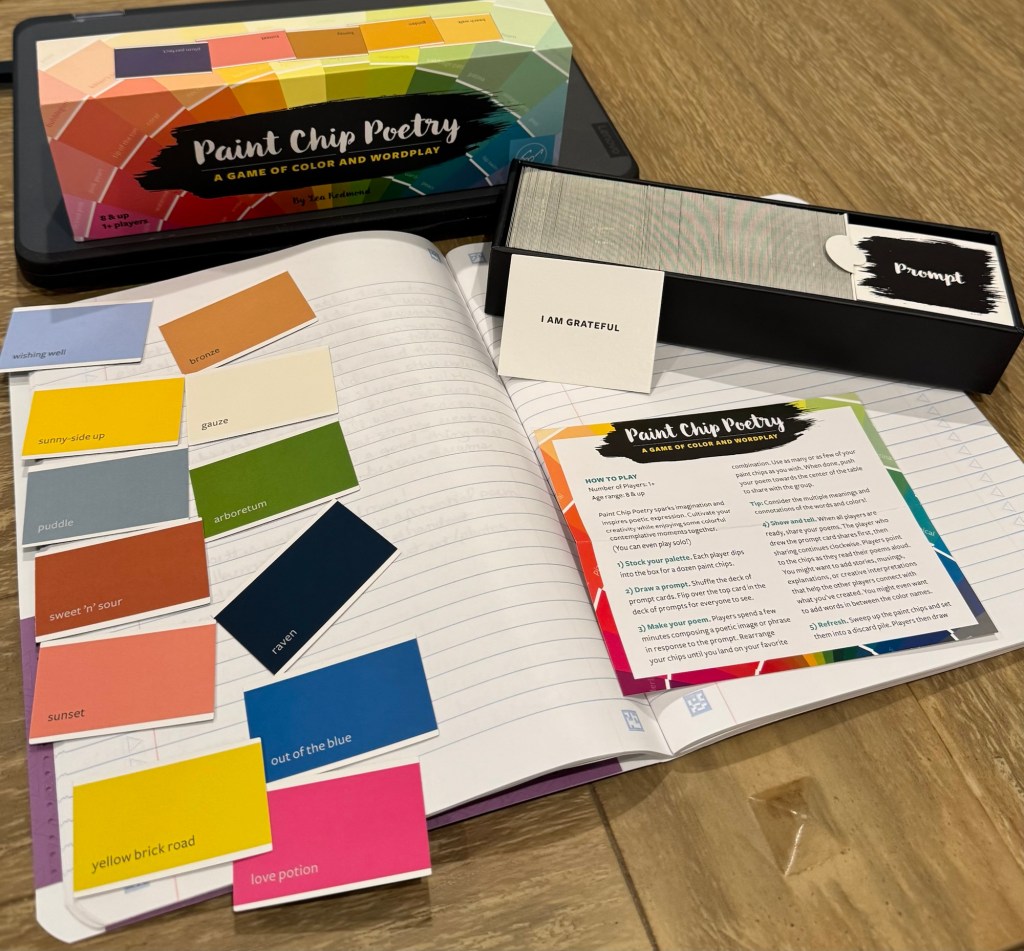
The color chips I chose for my first attempt were: bronze, love potion, raven, arboretum, puddle, sweet ‘n sour, wishing well, sunny-side up, gauze, sunset, yellow brick road, out of the blue
The prompt card I selected said, “I am grateful.”
I did change the word “gauze” to “gaze” and “arboretum” to “trees,” but other than that, I pretty much stuck to the script. I hope you enjoy! 🙂
OPTIMISM
I am grateful
for time spent gazing at bronze sunsets
for happy moments that seem to come out of the blue
no wishing well or love potions necessary,
no dark ravens
hovering menacingly nearby
for inheriting my father’s ability
to see the sunny side of things,
no matter where the yellow brick road leads
for trees and puddles
and always being able to find the sweet
in spite of the sour.
 Amy Bellamy, Author
2 thoughts on “Paint Chip Poetry”