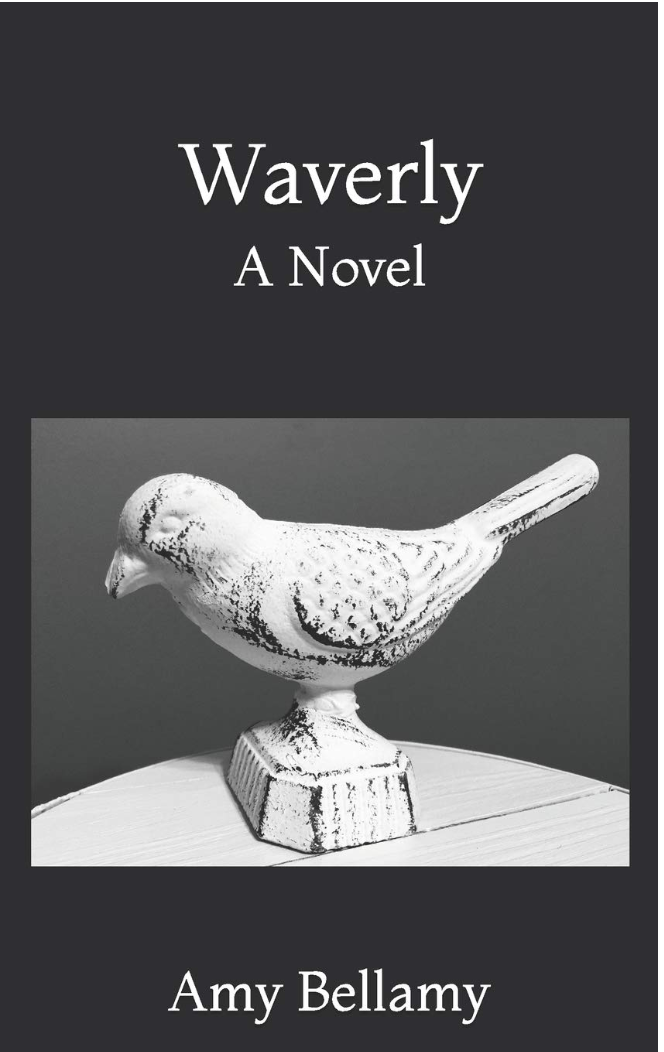

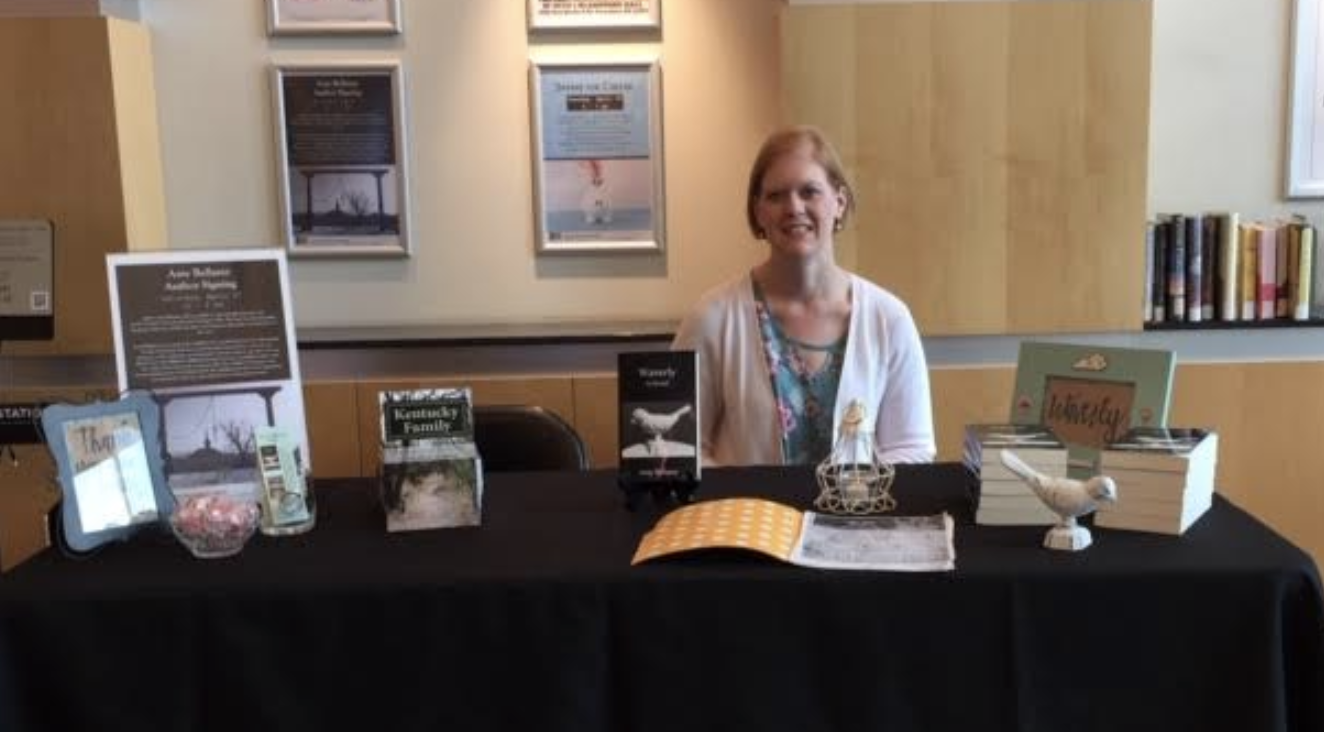
When I first started writing my novel, Waverly, I knew it would probably generate a lot of local interest. Since its publication, I have been overwhelmed by the support and interest from readers and history buffs who have heard about the book. I’ve listened to messages and read emails from various people in the community who have family connections to the crime scene, the victim, or the police involved in the case.
I was excited for the chance today to meet some fellow history buffs and chat about the historical events in person at my book signing event, but nothing could have prepared me for the moment when I met the grandchildren of one of the novel’s main characters.

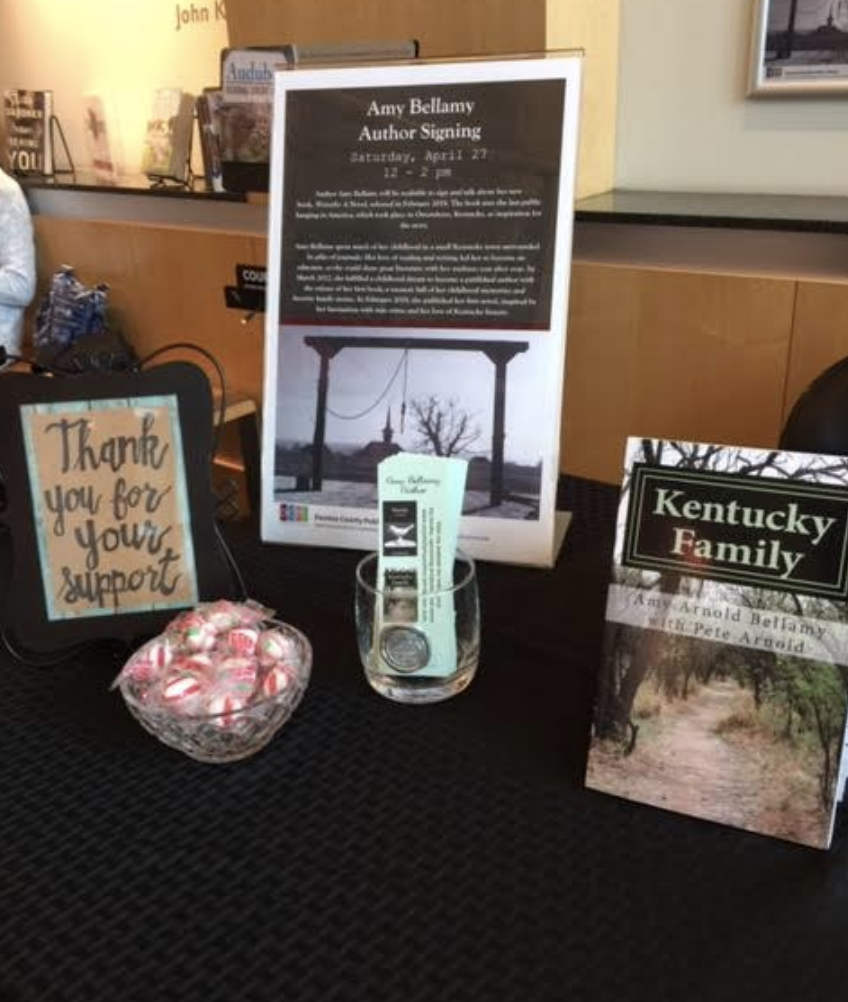
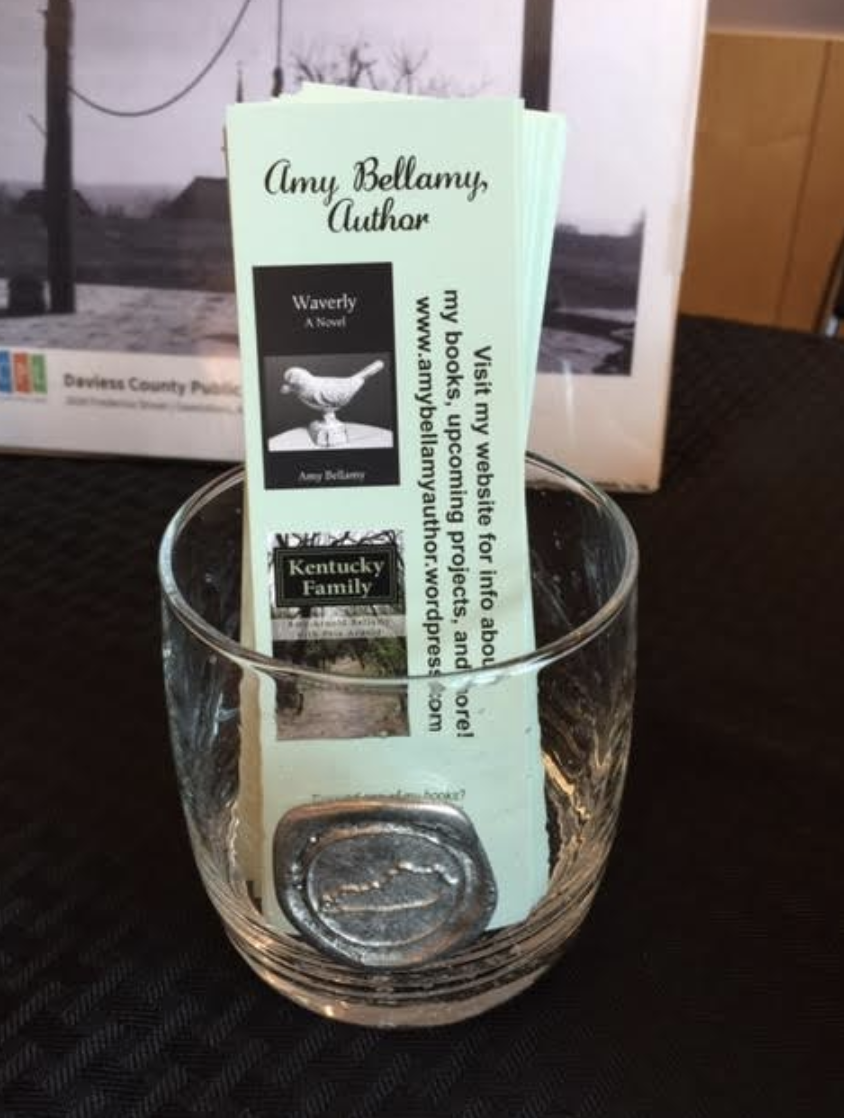
Waverly was inspired by true events that happened in 1936. That year, a wealthy, elderly widow was brutally raped and murdered in my hometown of Owensboro, Kentucky. Days later, a young black man was arrested and charged. He was found guilty and sentenced to the death penalty. Ironically, Owensboro had a female sheriff at the time, and it became her duty to oversee the execution. The resulting media frenzy had a lasting impact on the town of Owensboro and also the judicial system as a whole.
Waverly includes many elements from the true events, but it is a work of fiction. I changed names, added characters, and changed details according to the plotline I developed. I like to describe it as a blend of fact and imagination. I researched the case meticulously, and then asked a lot of “what if” questions.
We arrived about an hour early to set up for the book signing, and several people were already milling around. One of the first people to stop by the table shared that his great-grandfather was the owner of the house where the murder occurred.
He showed me pictures of the family and told me about the house and his great-grandparents, including how the knowledge that the crime had occurred on his property likely led to his great-grandfather’s declining health and subsequent death.
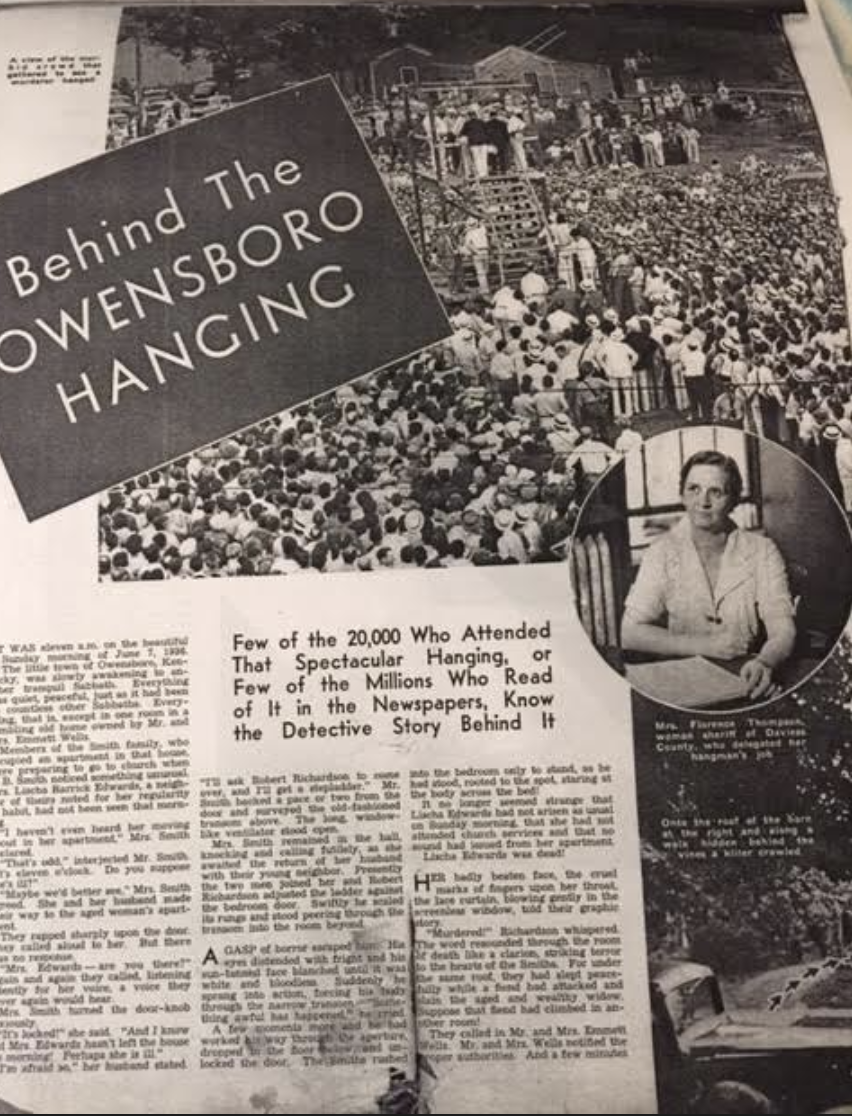
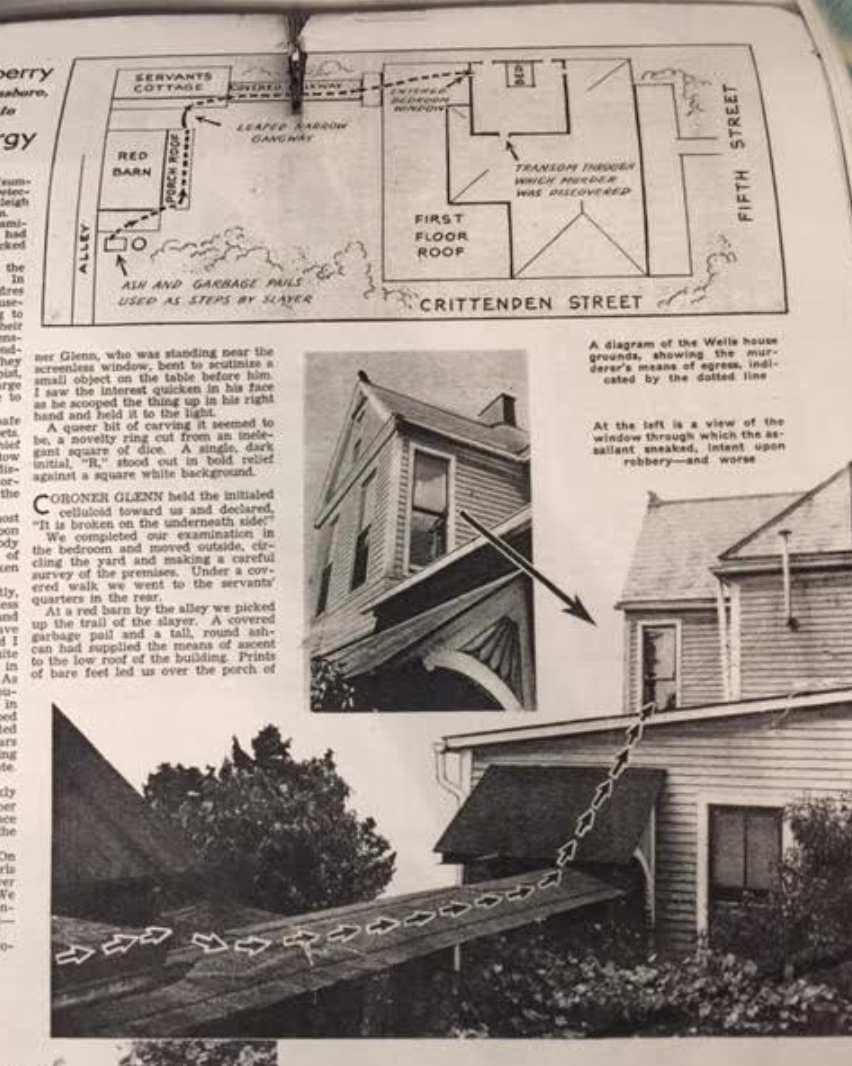
He handed me an old detective magazine that had been passed down through his family. It contained a detailed article of the crime investigation, co-written by the Owensboro Chief of Police who had been in charge of the investigation back in 1936. Soon, the man handed me a photocopy of the article and told me I could keep it for my collection.

Another interesting person I met today is a retired attorney from Rockport, Indiana, just across the river. He wrote a nonfiction manuscript detailing a lynching that occurred in Rockport in 1900, and he graciously brought a copy for me to read. I am not familiar with this case, so I am excited to read his book and learn more about it.
A little later, a couple approached my signing table with a briefcase. The man said, “You don’t know me, but my father was James Thompson. Florence Thompson was my grandmother.” Florence Thompson. As in, THE Florence Thompson. As in, the woman who was the sheriff in 1936 when the last public execution happened. As in, the inspiration for one of the main characters in my book.
I was in complete shock. I had no idea how any of Mrs. Thompson’s family members would feel about the book, but I was thrilled to have a chance to talk to them about it.
When I began writing Waverly, I worried about public reaction to the novel quite a bit. To this day, the execution is a sore spot for many people. Owensboro was ridiculed in the press at the time due to the thousands of spectators that assembled to watch the execution in what was ( somewhat inaccurately) described as a “carnival atmosphere.”
Since I did not want to offend any descendants of the actual people involved and I wanted to avoid the associated controversies, I wrote Waverly as a work of fiction, inspired by true events. I changed the town and character names and some elements of the storyline, in addition to creating some completely fictional characters.
I knew from my research that Mrs. Thompson was horrified at being associated with the execution and did not want to be remembered solely for her role in the events. Thankfully, Mrs. Thompson’s family members were actually very excited about Waverly. They shared stories about their grandparents and opened the briefcase to reveal a treasure trove of historical documents and artifacts related to the case.
I was in awe as they revealed original photos, some of the hate-filled letters their grandmother received (which I wrote about in the novel), and even the sheriff’s badge that belonged to their grandfather.
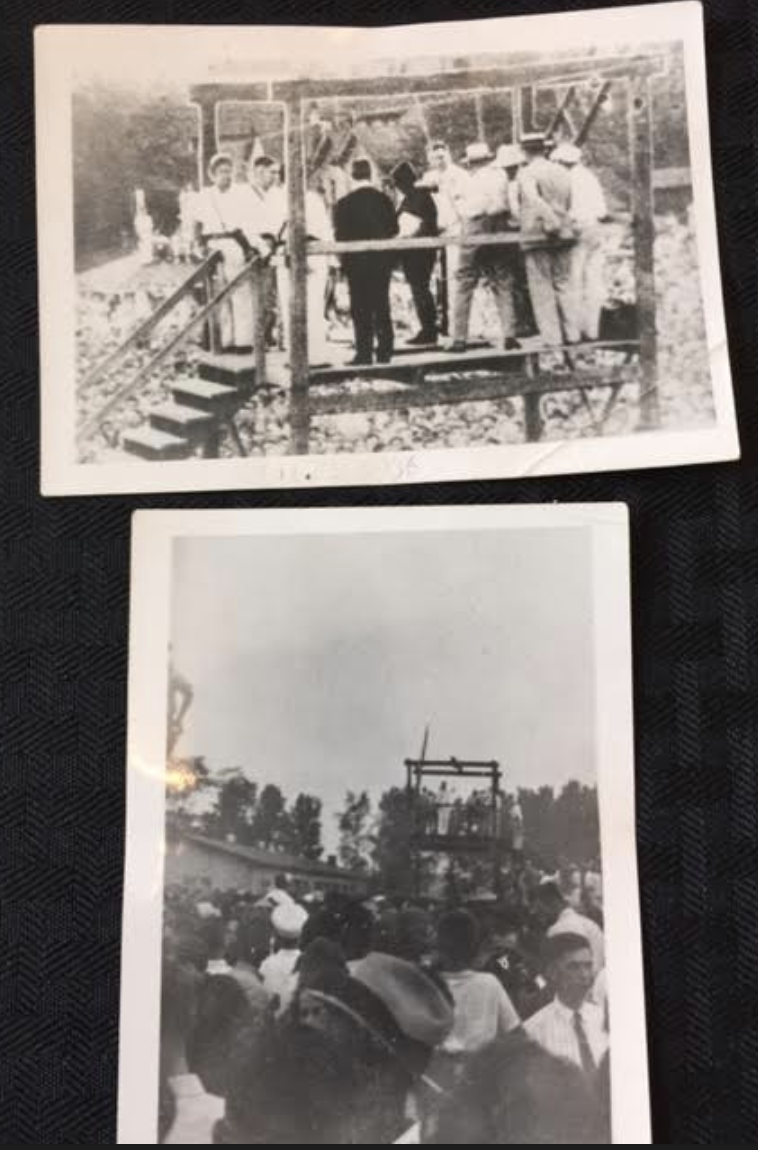
Original photos, courtesy of the Thompson family. 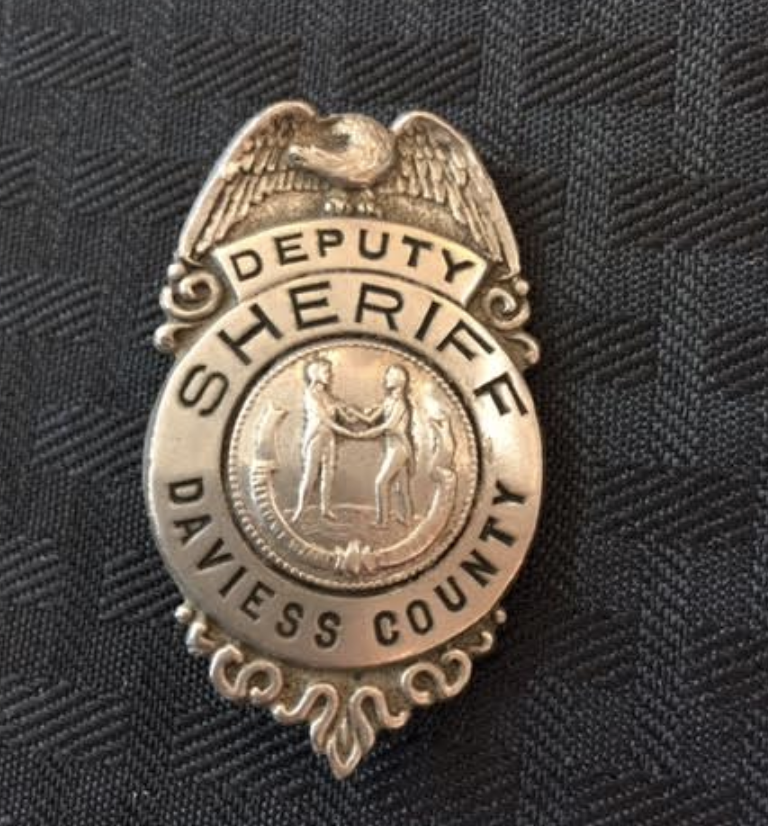
Everett Thompson’s badge, courtesy of the Thompson family.
They even graciously handed me a 1933 campaign poster from when their grandfather first ran for sheriff and said, “We brought this for you.” It was a surreal moment, as I looked at the yellowed papers and original photographs related to the case that I have been obsessed with for so long.
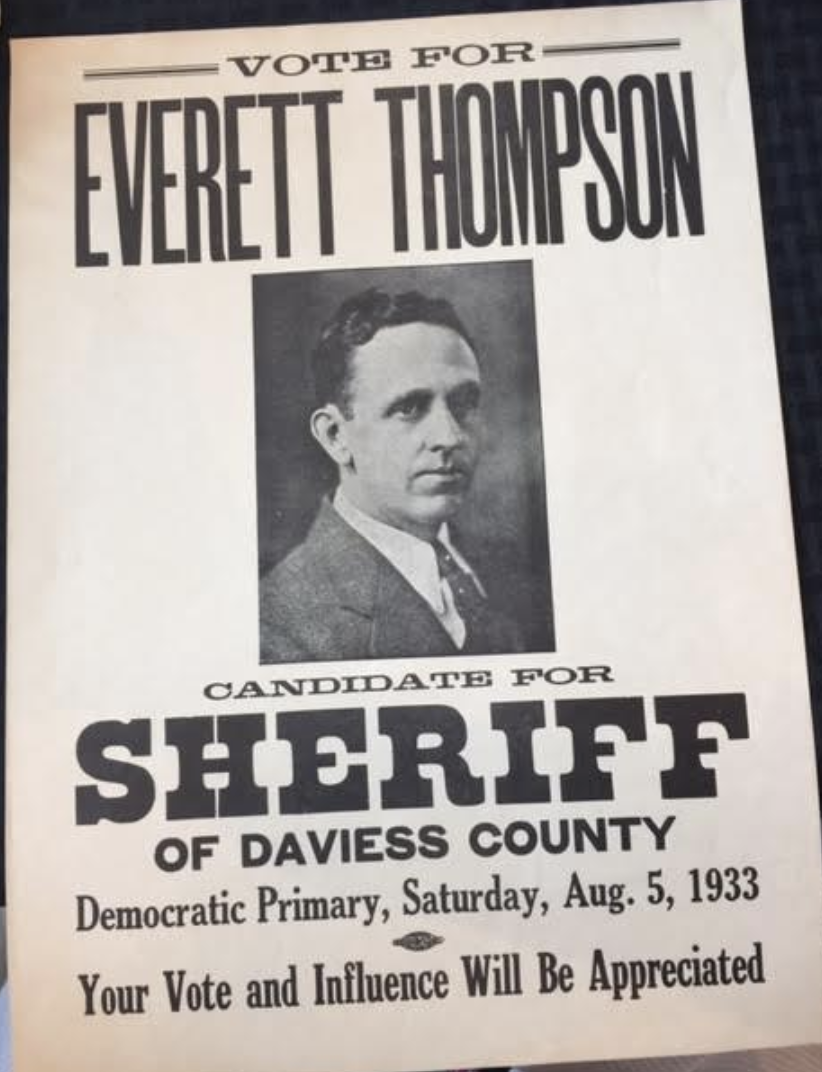
I am so thankful for the opportunity to meet the family of Mrs. Thompson today and the chance to explain in person how much I admire her for stepping in to take on a role that she never asked for and certainly wasn’t prepared for. I also met so many other wonderful people who were so supportive and excited about the novel. It was such a fun day!
The library has asked me to come back this fall and do a presentation about Waverly, since so many people have expressed an interest in the book and the historical events that inspired it.
I think that will be another surreal moment, when I step up to the podium and read an excerpt from my book in the same building where I did most of the research to write it.
Happy reading! 🙂
 Amy Bellamy, Author